





Contenido

Alimentos y bebidas Industria
The Practical Guide to Surface Science (2026)

?s=100&d=m
Escrito por
No biography added yet.
leer más
?s=100&d=m
Reviewed by
N/A
No biography added yet.
leer más
?s=100&d=m
Written By

No biography added yet.

?s=100&d=m
Reseña escrita por

N/A N/A

No biography added yet.

This is a practical guide to Surface Science for researchers working in the Food & Beverages Industry.

En esta nueva guía aprenderás todo sobre:

  • Principios cruciales de la ciencia de superficies
  • The significance of surface science measurements for the Food & Beverages industry
  • Normas y directrices ASTM aplicables

Vamos a sumergirnos en ello.

food and beverages scaled

Executive Summary

What it covers: A practical, Food & Beverages–focused guide to using surface science to understand and improve products and packaging, centered on four core measurements: contact angle, surface tension, surface energy, and sliding angle. It explains what each measurement means, how it’s performed, and where it matters in real manufacturing and QC.
Key insights: Static contact angles can be misleading on real-world surfaces; advancing/receding (dynamic) angles better capture wetting, removal, and surface variability caused by roughness, contamination, and heterogeneity. Young–Laplace fitting is generally more consistent but needs an axisymmetric droplet, while polynomial fitting is more flexible but more sensitive to local defects; dynamic surface tension is critical when interfaces change fast (droplets, bubbles, foams, and drying/evaporation-driven composition shifts).
Business value: Use wettability and interfacial measurements to make outcomes like sauce texture, chocolate finish, and beverage/packaging performance more predictable—reducing trial-and-error and tightening batch-to-batch consistency. In packaging and shelf-life work, quick surface checks (e.g., water contact angle) help detect contamination, treatment drift, and material choices that drive moisture behavior and product waste.
Standards to follow: ASTM D5946 and ISO 15989 provide an auditable approach for measuring water contact angle on corona-treated polymer films (with ISO offering an optional wetting-tension conversion to bridge legacy “dyne level” specs). Follow the reporting checklist (material/treatment history, test conditions, droplet parameters, analysis method, and statistics across multiple zones) and treat contact angle as a QC indicator of wetting—not a standalone proof of adhesion performance.
Bottom line: This is a measurement-first playbook for improving food and beverage products and packaging by quantifying wetting and interface behavior instead of guessing. Apply the four surface measurements with standards-driven reporting and benchmark comparisons to set reliable process targets, spot drift early, and improve quality, shelf life, and manufacturing efficiency.

Capítulo 1: Introducción

In the highly competitive domain of food and beverages, a multitude of obstacles are consistently present. Professionals in this field are always faced with intricate challenges, ranging from attaining optimal texture in sauces to guaranteeing the preservation of packaged products.

The significance of surface qualities is sometimes underestimated in the art of food creation. Surface Science measurements have an impact on several aspects ranging from the texture of chocolate to the longevity of drinks on store shelves. By acquiring a more profound comprehension of these aspects, one might potentially transform their approach to food and beverage manufacturing, resulting in exceptional levels of quality and flavor.

We use the following surface properties to understand the behavior of Food & Beverages products and improve their quality.

Capítulo 2: Medición del ángulo de contacto

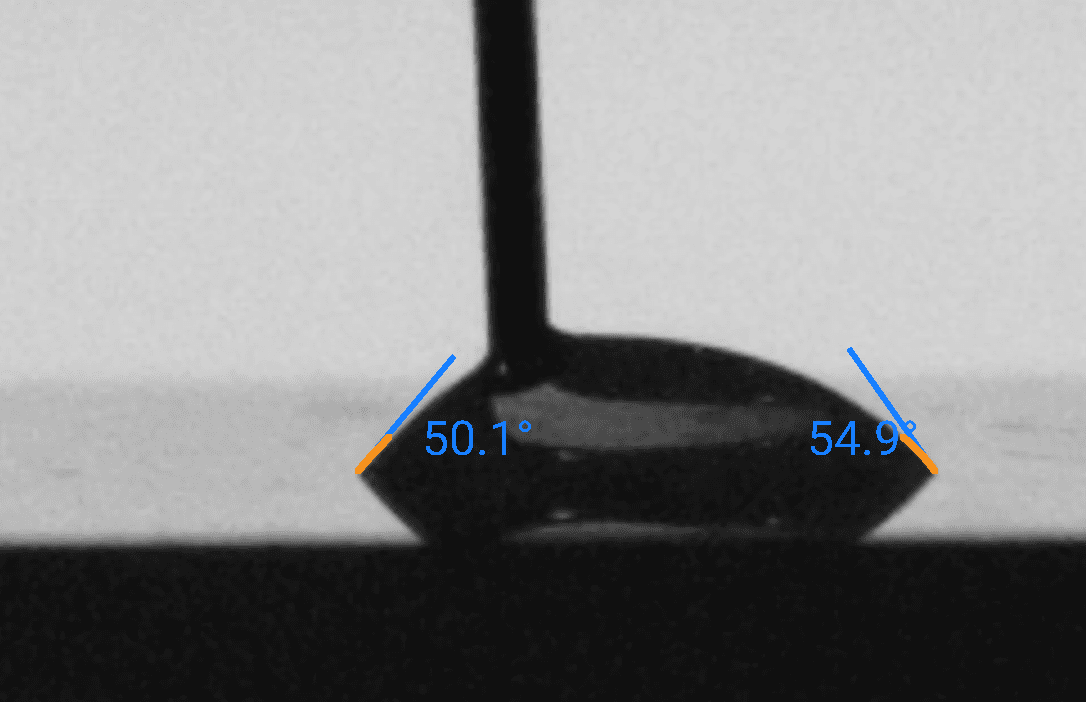
El ángulo de contacto cuantifica la humectabilidad de una superficie representando el ángulo entre la superficie de un líquido y una superficie sólida.
Investigación de Dropletlab

Sample Image taken from Droplet Lab Tensiometer.

Joven – Método Laplace

Método polinómico

Ángulo de contacto dinámico

Ideally, when we place a drop on a solid surface, a unique angle exists between the liquid and the solid surface. We can calculate the value of this ideal contact angle (the so-called Young’s contact angle) using Young’s equation. In practice, due to surface geometry, roughness, heterogeneity, contamination, and deformation, the contact angle value on a surface is not necessarily a single consistent value but rather falls within a range. The upper and lower limits of this range are known as the advancing and receding contact angles, respectively. The values of advancing and receding contact angles for a solid surface are highly sensitive to many parameters, such as temperature, humidity, homogeneity, and minor contamination of the surface and liquid. For example, the advancing and receding contact angles of a surface can differ at different locations.

Ángulo de contacto dinámico frente a ángulo de contacto estático

Las superficies y los recubrimientos prácticos muestran naturalmente histéresis de ángulo de contacto, lo que indica un rango de valores de equilibrio. Cuando medimos ángulos de contacto estáticos, obtenemos un solo valor dentro de este rango. Confiar únicamente en mediciones estáticas plantea problemas, como una repetibilidad deficiente y una evaluación incompleta de la superficie con respecto a la adherencia, la limpieza, la rugosidad y la homogeneidad.

In practical applications, we need to understand how easily a liquid spreads (advancing angle) and how easily it is removed (receding angle), such as in painting and cleaning. Measuring advancing and receding angles offers a holistic view of liquid-solid interaction, unlike static measurements, which yield an arbitrary value within the range.

Esta información es crucial para las superficies del mundo real con variaciones, rugosidad y dinámica, lo que ayuda a industrias como la cosmética, la ciencia de los materiales y la biotecnología a diseñar superficies efectivas y optimizar los procesos.

Aprenda cómo se realiza la medición del ángulo de contacto en nuestro tensiómetro

Para una comprensión más completa de la medición del ángulo de contacto, lea nuestra medición del ángulo de contacto: la guía definitiva

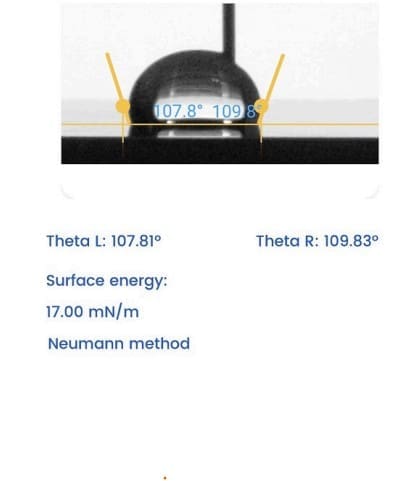
Open Benchmark Data: Contact Angle & Surface Energy

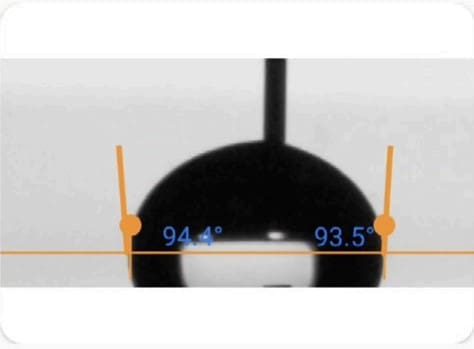
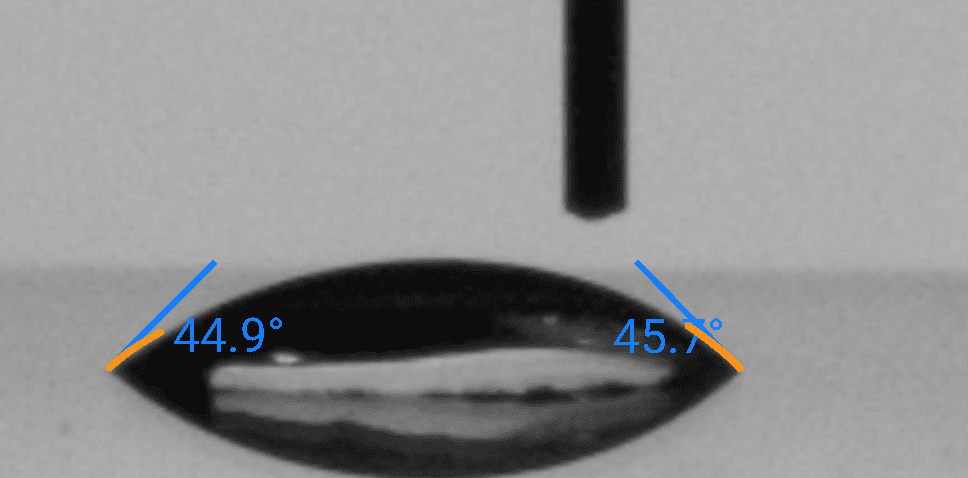
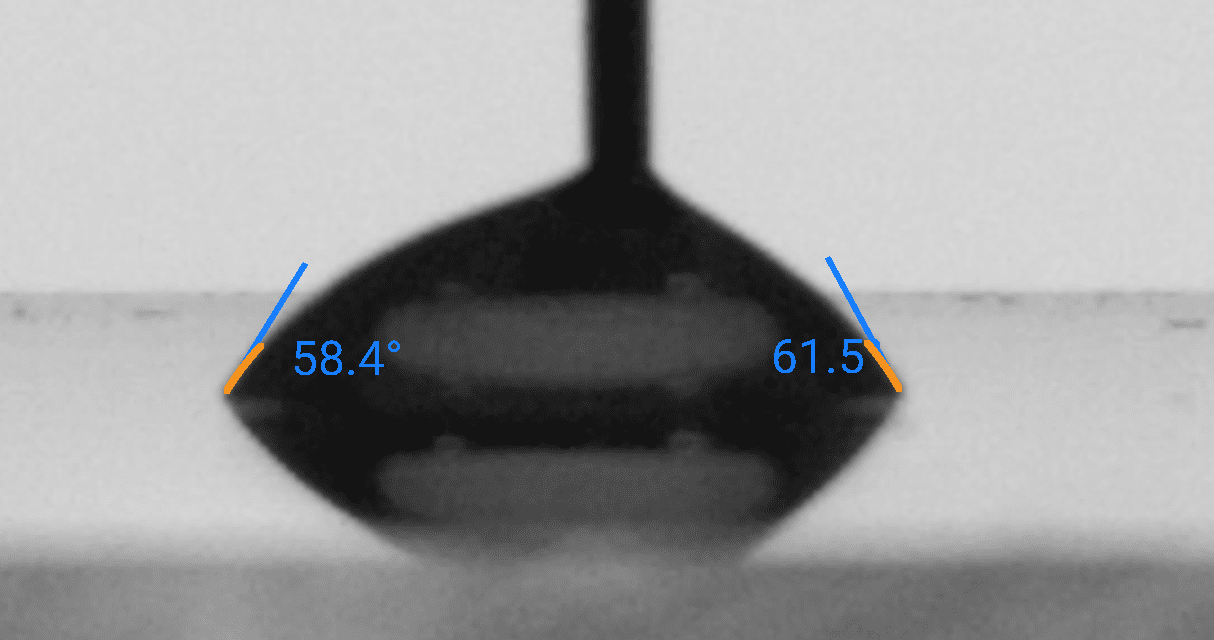
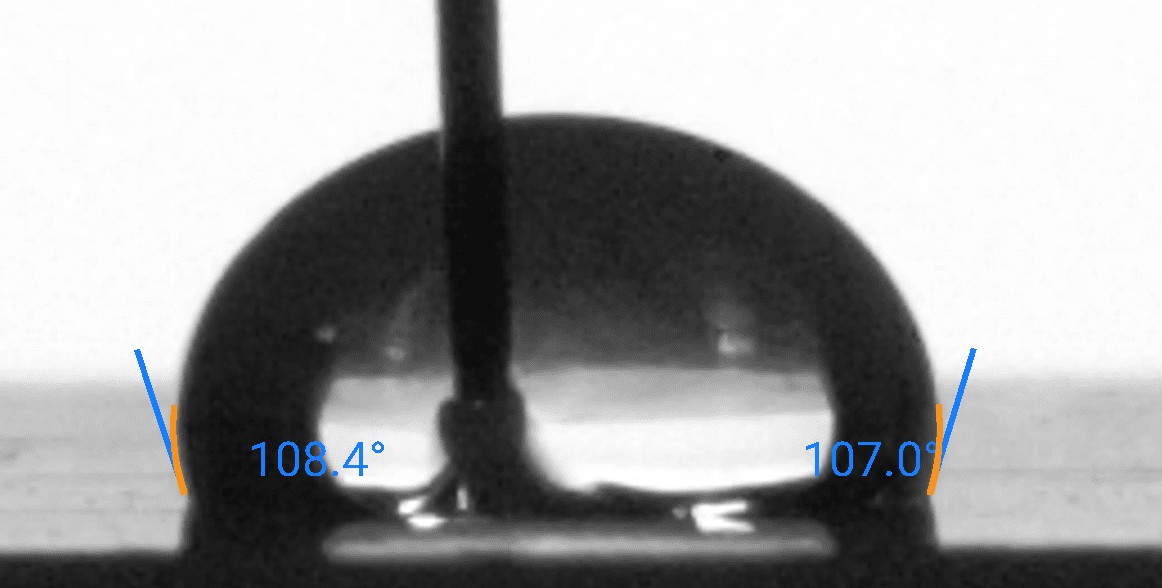
These reference measurements show how deionized water wets four standard substrates measured with the Droplet Lab Dropometer. Use them as visual and numerical benchmarks when you're checking your own sample preparation, treatments, and chemistry.

Full contact angle and surface energy datasets (including additional liquids and statistics) are available on our dataset hub.

Glass - DI Water
Glass - DI Water
Nylon - DI Water
Nylon - DI Water
PMMA - DI Water
PMMA - DI Water
Teflon - DI Water
Teflon - DI Water

The droplet images above are taken from the same benchmark series as our open dataset. For each substrate and probe liquid we report:

● Advancing and receding contact angles (and hysteresis)
● Derived surface energy (SFE) values based on multi-liquid measurements
● Measurement conditions, uncertainties, and sample preparation details

Comparing your own droplet shapes and angles against these references is a fast way to spot contamination, treatment drift, or unexpected changes in wettability.

Capítulo 3: Medición de la tensión superficial

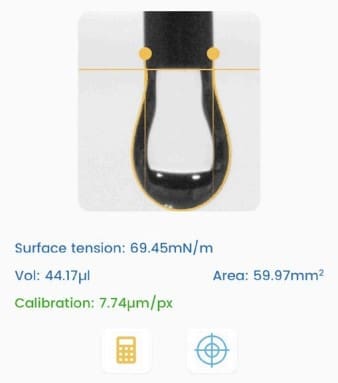
Esta propiedad mide la fuerza que actúa sobre la superficie de un líquido, con el objetivo de minimizar su superficie.

Medición de tensión superficial

Sample Image taken from Droplet Lab Tensiometer

Tensión superficial dinámica

La tensión superficial dinámica difiere de la tensión superficial estática, que se refiere a la energía superficial por unidad de área (o fuerza que actúa por unidad de longitud a lo largo del borde de una superficie líquida).

La tensión superficial estática caracteriza el estado de equilibrio de la interfaz líquida, mientras que la tensión superficial dinámica explica la cinética de los cambios en la interfaz. Estos cambios podrían implicar la presencia de tensioactivos, aditivos o variaciones en la temperatura, la presión y la composición en la interfaz.

Cuándo utilizar la medición dinámica de la tensión superficial

Dynamic surface tension is essential for processes that involve rapid changes at the liquid-gas or liquid-liquid interface, such as droplet and bubble formation, coalescence (change in surface area), the behavior of foams, and the drying of paints (change in composition, e.g., evaporation of solvent). It is measured by analyzing the shape of a hanging droplet over time.

La tensión superficial dinámica se aplica a diversas industrias, incluidas las cosméticas, los recubrimientos, los productos farmacéuticos, la pintura, los alimentos y las bebidas, y los procesos industriales, donde la comprensión y el control del comportamiento de las interfaces líquidas son esenciales para la calidad del producto y la eficiencia del proceso.

Aprenda cómo se realiza la medición de la tensión superficial en nuestro tensiómetro

Para una comprensión más completa de la medición de la energía superficial, lea nuestra medición de la tensión superficial: la guía definitiva

Capítulo 4: Medición de la energía superficial

La energía superficial se refiere a la energía requerida para crear una unidad de área de una nueva superficie.
231

Sample Image taken from Droplet Lab Tensiometer

Aprenda cómo se realiza la medición de la energía superficial en nuestro tensiómetro

Para una comprensión más completa de la medición de la energía superficial, lea nuestra medición de la energía superficial: la guía definitiva

For benchmark contact angle and surface energy values on glass, nylon, PMMA, and Teflon, see the Open Benchmark Data panel above or visit our Dataset Hub for full CSV downloads.

Capítulo 5: Medición del ángulo de deslizamiento

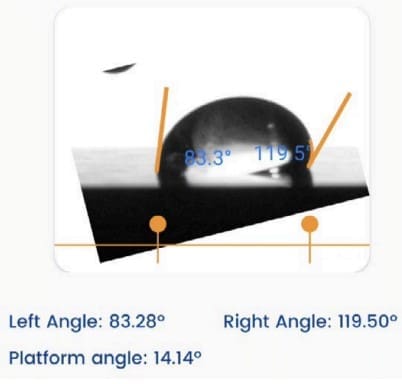
El ángulo de deslizamiento mide el ángulo en el que una película líquida se desliza sobre una superficie sólida. Se emplea comúnmente para evaluar la resistencia al deslizamiento de una superficie.

Ángulo de deslizamiento 1

Sample Image taken from Droplet Lab Tensiometer

Aprenda cómo se realiza la medición del ángulo de deslizamiento en nuestro tensiómetro

Para una comprensión más completa de la medición del ángulo de deslizamiento, lea nuestra medición del ángulo de deslizamiento: la guía definitiva

Capítulo 6: Aplicaciones en el mundo real

Within the Food & Beverages industry, several case studies exemplify the advantages of conducting surface property measurements.

Breathable, biodegradable soyhull-cellulose packaging films validated by contact-angle testing to extend raspberry shelf-life

Post-harvest loss of fruits and vegetables, and health risks and environmental impact of current plastic packaging warrant new biodegradable packaging. To this end, cellulosic residue from agricultural processing byproducts is suitable due to its renewability and sustainability. Herein, soyhulls cellulosic residue was extracted, solubilized in ZnCl2 solution, and crosslinked with calcium ions and glycerol to prepare biodegradable films. The film combination was optimized using Box Behnken Design and film properties were characterized. The optimized film is translucent and exhibits tensile strength, elongation at break, water vapor permeability, hydrophobicity, and IC50 of 6.3 ± 0.6 MPa, 30.2 ± 0.9%, 0.9 ± 0.3 × 10− 10 gm− 1 s− 1 Pa− 1, 72.6◦, and 0.11 ± 0.1 g/mL, respectively. The water absorption kinetics follow the Peleg model and biodegrade within 25 days at 24% soil moisture. The film extends the shelf life of raspberries by 6 more days compared to polystyrene film. Overall, the value-added soyhull cellulosic films are advantageous in minimizing post-harvest loss and plastic-related issues, emphasizing the principles of the circular bioeconomy.

Role of the Droplet Lab Goniometer

The study used a Droplet Lab Dropometer to quantify the water contact angle (WCA) of the optimized soyhull cellulosic residue (SCR) film, as a direct readout of surface wettability / hydrophobicity:

  • Where it’s described: Methods section “2.2.6.5. Water contact angle” (page 4) specifies measuring WCA on the film using a Dropometer (Droplet Lab, Canada), capturing the droplet image via a smartphone interface, and analyzing via sessile drop software.
  • Why it mattered in this work: WCA supported how the film surface interacts with water—an important packaging-relevant property tied to moisture interactions, condensation tendency, and practical barrier behavior for fresh produce packaging.

Key quantitative outcome: The optimized film’s WCA was 72.6° (reported and visualized in Fig. 2f and discussed in the wettability section), indicating a moderately hydrophilic surface (< 90°), which aligns with the film acting as a semi-permeable packaging layer rather than a fully moisture-blocking plastic film.

Key Findings

  • Optimized formulation (SH12) (0.4 g SCR, 500 mM CaCl₂, 1.5% glycerol) achieved:
    • Tensile strength: 6.3 ± 0.6 MPa
    • Elongation at break: 30.2 ± 0.9%
    • Water vapor permeability: 0.9 ± 0.3 × 10⁻¹⁰ g·m⁻¹·s⁻¹·Pa⁻¹
  • Wettability (Droplet Lab measurement): Water contact angle = 72.6°, supporting the film’s moderately hydrophilic surface character (Fig. 2f; discussion in WCA section).
  • Functional performance: Film extended raspberry shelf-life by ~6 days at room temperature relative to polystyrene film (shelf-life study results section; Fig. 4).
  • Sustainability end-of-life: Film biodegraded within ~25 days at 24% soil moisture (biodegradation section; Fig. 2g).
  • Active packaging attributes: Film provided UV protection (transmittance results; Fig. 2c) and measurable antioxidant activity (DPPH IC50 reported in abstract and methods/results).

Why it Matters

For packaging developers and fresh-produce packers, this work demonstrates that agricultural byproduct–derived cellulose films can be engineered (via ionic crosslinking + plasticization) to hit a practical balance of mechanical integrity, breathability (moisture control), and functional protection (UV/antioxidant). The contact angle result (72.6°) provides a quick, quantitative surface check that the film is not excessively hydrophobic (which can trap moisture) nor extremely hydrophilic (which can compromise integrity), helping guide material selection, formulation optimization, and QC specifications for produce packaging where condensation management is critical.

Method Snapshot

  • Sample: Regenerated soyhull cellulosic residue film crosslinked with Ca²⁺ and plasticized with glycerol (cast from ZnCl₂-solubilized cellulose; ethanol coagulation/regeneration).
  • Droplet/angle method: Water droplet, sessile-drop contact angle measurement using Droplet Lab Dropometer with smartphone image capture and software angle calculation (static WCA implied; advancing/receding not indicated).
  • Temperature: Not explicitly stated for contact-angle testing; film drying/storage and several tests were conducted at ~22 ± 2 °C, indicating typical ambient lab conditions.
  • Surface tension: Not measured in this paper (probe liquid was water for contact-angle testing).

Data Note

  • Figure 2f (page 6) shows the water droplet image on the film and reports a water contact angle of 72.6°, which is the measurement performed using the Droplet Lab Dropometer (paired with the method description in section 2.2.6.5 on page 4).
Figure

Citation (APA Format)

Regmi, S., & Janaswamy, S. (2024). Biodegradable films from soyhull cellulosic residue with UV protection and antioxidant properties improve the shelf-life of post-harvested raspberries. Food Chemistry, 460, 140672. https://doi.org/10.1016/j.foodchem.2024.140672

View Publication →

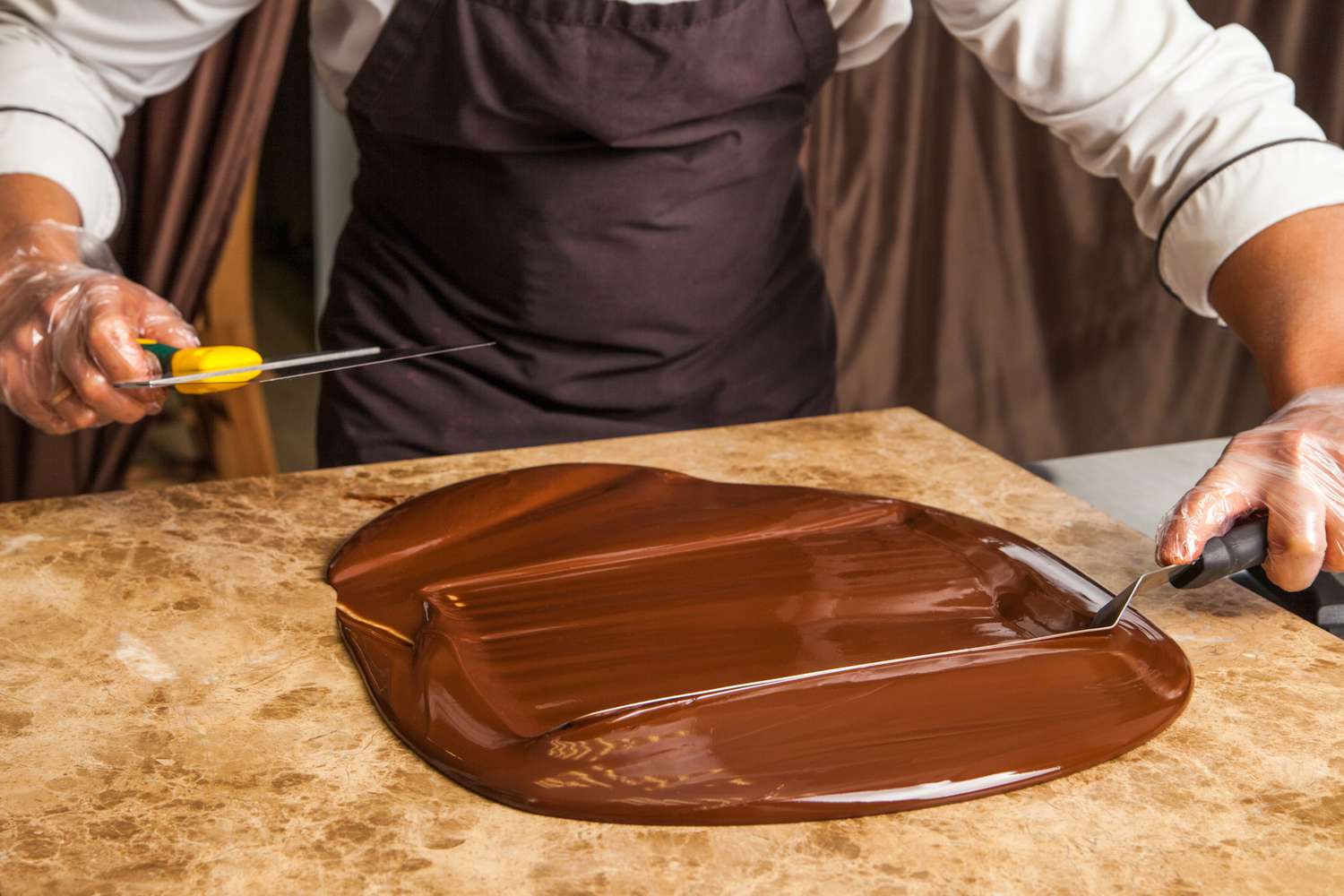
Perfecting Chocolate Tempering: Crafting Irresistible Delicacies

Imagine you're a chocolatier, striving to create chocolates that not only taste exquisite but also have a captivating aesthetic. The technique of chocolate tempering is crucial for achieving the desired texture and glossy appearance. Traditionally, tempering requires precise temperature control, but surface science measurements simplify this process significantly.

By accurately measuring surface tension and surface energy, you can attain the optimal temper for chocolates. Manipulating these surface properties ensures your chocolates have a rich, pleasing texture and an appealing, shiny appearance that attracts consumers. Say goodbye to the inconsistencies of traditional tempering methods and embrace a more reliable and efficient approach that elevates the quality of your chocolate creations to new heights.

Perfecting Chocolate Tempering: Crafting Irresistible Delicacies

Beverage Preservation: Enhancing Freshness and Efficiency

In the beverage industry, maintaining freshness is paramount. For manufacturers of juices, soft drinks, and alcoholic beverages, ensuring product freshness and shelf life is crucial. Conventional packaging techniques often fall short, leading to wasted resources and increased costs.

Accurate contact angle measurement provides a critical evaluation of the wetting characteristics of beverage packaging materials. This knowledge allows you to select materials that effectively prevent moisture infiltration, thereby prolonging the quality and shelf life of your drinks. This practice not only reduces product waste but also lowers packaging costs, ultimately enhancing the financial performance of the organization.

Beverage Preservation: Enhancing Freshness and Efficiency

Somos sus socios en la resolución de su negocio y tecnología Desafíos

Si está interesado en implementar estas u otras aplicaciones, póngase en contacto con nosotros.

Capítulo 7: Normas y directrices

In an industry where precision reigns supreme, how can Food & Beverages manufacturers ensure their products withstand scrutiny? The answer lies in standards and guidelines: the compass that guides them through the complex maze of quality and performance.

ASTM D5946 / ISO 15989 — Water Contact Angle on Corona‑Treated Polymer Films (Optional Wetting‑Tension Conversion)

What it is

A test method for measuring the water contact angle (θ) of a sessile droplet on corona‑treated polymer films to verify treatment level and assess wetting behavior. ISO 15989 uses the same water contact angle measurement and adds an optional step to determine wetting tension (γc) from a defined conversion chart (often used to bridge legacy “dyne level” specifications).

When to use it

Corona treatment verification for print/bond readiness

Use when you need an objective, auditable measure of surface wetting on PE/PP/PET (and similar) films instead of subjective dyne-solution observations.

Uniformity control across the web (edge–center–edge / lane mapping)

Use when you need to confirm treatment consistency across web width or over time (shift-start checks, electrode maintenance, storage fade studies).

In-scope / Out-of-scope

In scope
  • Water sessile-drop contact angle on corona-treated polymer film surfaces (θ as the primary measured output)
  • Multiple measurement locations to capture point-to-point variability and nonuniform treatment (mapping is expected for meaningful QC)
  • Reporting treatment level guidance using angle bands (commonly used practical ranges for many low-surface-energy films)
  • Optional ISO output: estimate wetting tension γc from θ using the ISO conversion chart (mN/m = dyne/cm)
Out of scope
  • Claiming adhesion performance from θ alone (contact angle is an indirect indicator; adhesion must be validated with end-use testing/capability studies)
  • Receding angle / hysteresis characterization (this workflow is centered on water contact angle for treatment verification)
  • Direct measurement of liquid surface tension (this is not a tensiometry method)
  • Surfaces with strong chemical affinity for water (ISO notes the method is not applicable in this case)

Minimum you must report (checklist)

  • Film identification: polymer type, structure (mono/multi-layer), surface side tested, and any additives/coatings/primers if known
  • Treatment history: corona/plasma/primer details (if available) and time since treatment (including any storage/aging conditions)
  • Test liquid: DI water (grade/source) and any conditioning steps (e.g., temperature equilibration)
  • Environmental conditions: temperature and relative humidity during test
  • Instrument & method: goniometer/drop shape analysis approach, calculation/fit method, and any software version if applicable
  • Drop parameters: droplet volume, dispense method/needle, and time window used to read/report θ (define your SOP timing)
  • Results & statistics: θ per zone plus summary statistics (e.g., median + IQR or mean ± SD), pass/monitor/fail limits used, and optional γc reported as “derived from ISO conversion chart” if included

Note: Water contact angle is a strong, QC-friendly indicator of surface wetting and treatment consistency, but it is not, by itself, a complete measure of adhesion or print durability. Acceptance limits should be established per film family and end-use via capability studies that correlate θ to real outcomes (ink adhesion, rub resistance, lamination bond strength, etc.).

How to interpret results (guardrails)

  • Treatment level (common practical guide for many low-energy films): θ > 90° marginal/no treatment; 85–90° low; 78–84° medium; 71–77° high; < 71° very high.
  • “Lower θ = better wetting” decision rule: A flatter drop (lower θ) generally indicates higher treatment and lower risk of wetting-related print/bond defects (for polar interfaces).
  • Uniformity matters as much as the average: Treat edge-to-center differences and large spreads as process signals (nonuniform corona, contamination, handling, or aging), not “noise.”
  • Use θ as the primary QC metric; validate performance separately: If customers specify dynes, you may report γc from the ISO chart as a continuity metric—but keep θ primary and confirm adhesion with product-specific testing.

Ahora te toca a ti

We hope this guide showed you how to apply surface science in the Food & Beverages industry.

Ahora nos gustaría entregárselo a usted:

Feel free to leave a comment below—we’d love to hear from you.

One Response

Contesta

Su dirección de correo electrónico no será publicada. Los campos obligatorios están marcados *


Descargar Experimento