
This is a practical guide to Surface Science for researchers working in the Telecommunications Industry.
En esta nueva guía aprenderás todo sobre:
Vamos a sumergirnos en ello.
In today’s world, telecommunications system can be characterized by voice, data, and video networks. This sector is continuously enabling global connectivity, facilitating information exchange, and driving economic growth. Extending the life of crucial components like outdoor antennas and safeguarding cables from environmental damage are some major challenges faced by this sector. And in this regard surface properties, which plays crucial role in the interaction between different materials and their surroundings, becomes very important.
We use the following surface properties to understand the behavior of Telecommunications products and improve their quality.
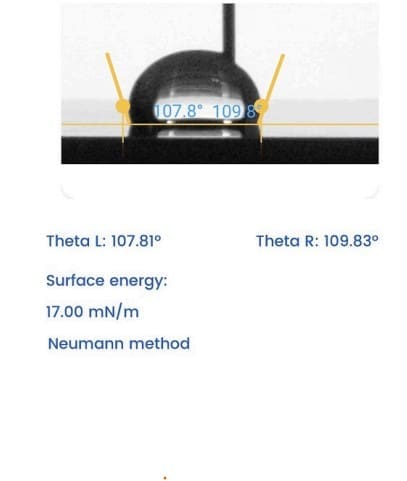
Sample Image taken from Droplet Lab Tensiometer.
Joven – Método Laplace
Método polinómico
Ideally, when we place a drop on a solid surface, a unique angle exists between the liquid and the solid surface. We can calculate the value of this ideal contact angle (the so-called Young’s contact angle) using Young’s equation. In practice, due to surface geometry, roughness, heterogeneity, contamination, and deformation, the contact angle value on a surface is not necessarily a single consistent value but rather falls within a range. The upper and lower limits of this range are known as the advancing and receding contact angles, respectively. The values of advancing and receding contact angles for a solid surface are highly sensitive to many parameters, such as temperature, humidity, homogeneity, and minor contamination of the surface and liquid. For example, the advancing and receding contact angles of a surface can differ at different locations.
Las superficies y los recubrimientos prácticos muestran naturalmente histéresis de ángulo de contacto, lo que indica un rango de valores de equilibrio. Cuando medimos ángulos de contacto estáticos, obtenemos un solo valor dentro de este rango. Confiar únicamente en mediciones estáticas plantea problemas, como una repetibilidad deficiente y una evaluación incompleta de la superficie con respecto a la adherencia, la limpieza, la rugosidad y la homogeneidad.
In practical applications, we need to understand how easily a liquid spreads (advancing angle) and how easily it is removed (receding angle), such as in painting and cleaning. Measuring advancing and receding angles offers a holistic view of liquid-solid interaction, unlike static measurements, which yield an arbitrary value within the range.
Esta información es crucial para las superficies del mundo real con variaciones, rugosidad y dinámica, lo que ayuda a industrias como la cosmética, la ciencia de los materiales y la biotecnología a diseñar superficies efectivas y optimizar los procesos.
Aprenda cómo se realiza la medición del ángulo de contacto en nuestro tensiómetro
Para una comprensión más completa de la medición del ángulo de contacto, lea nuestra medición del ángulo de contacto: la guía definitiva
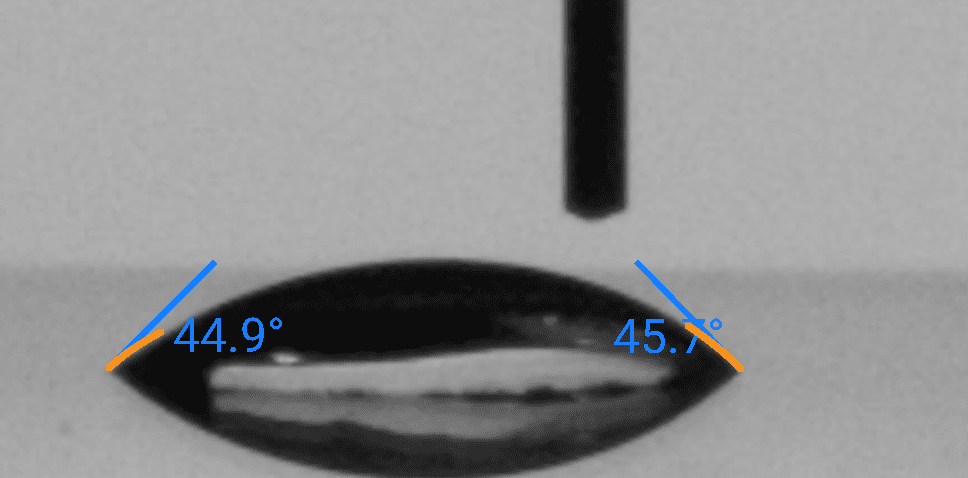
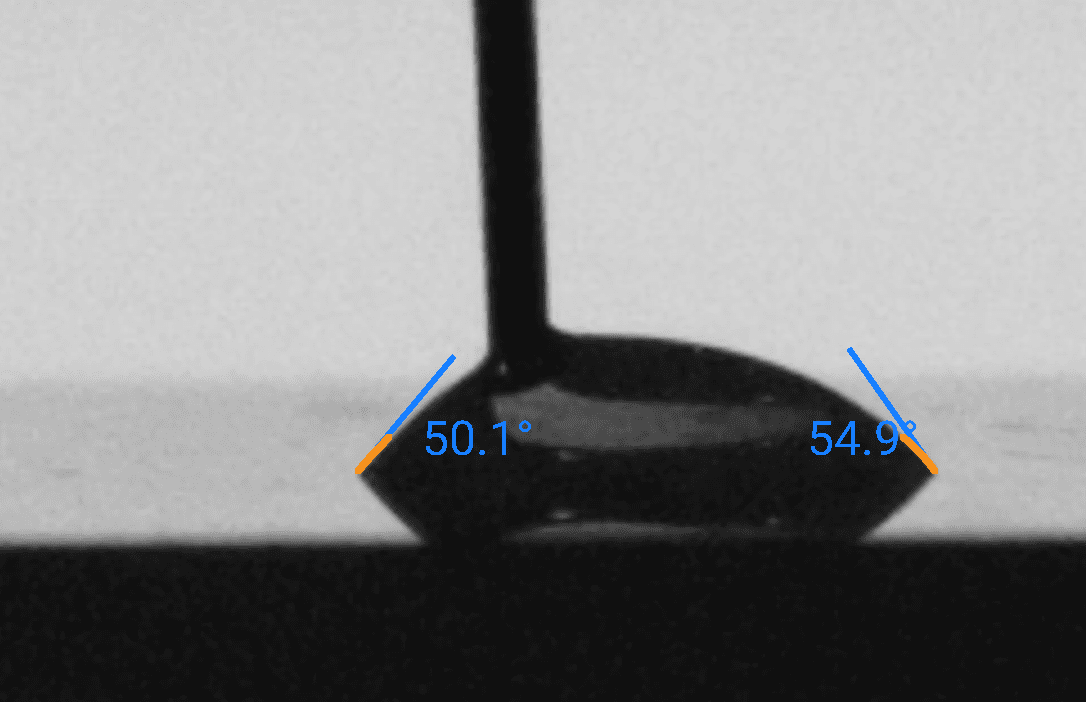
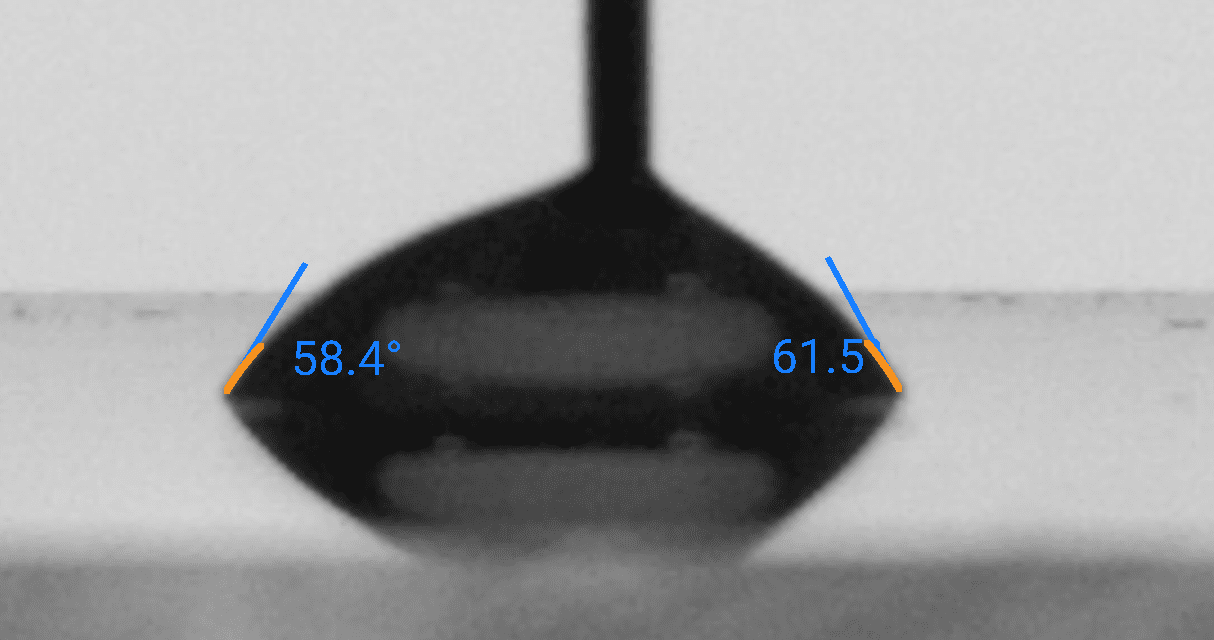
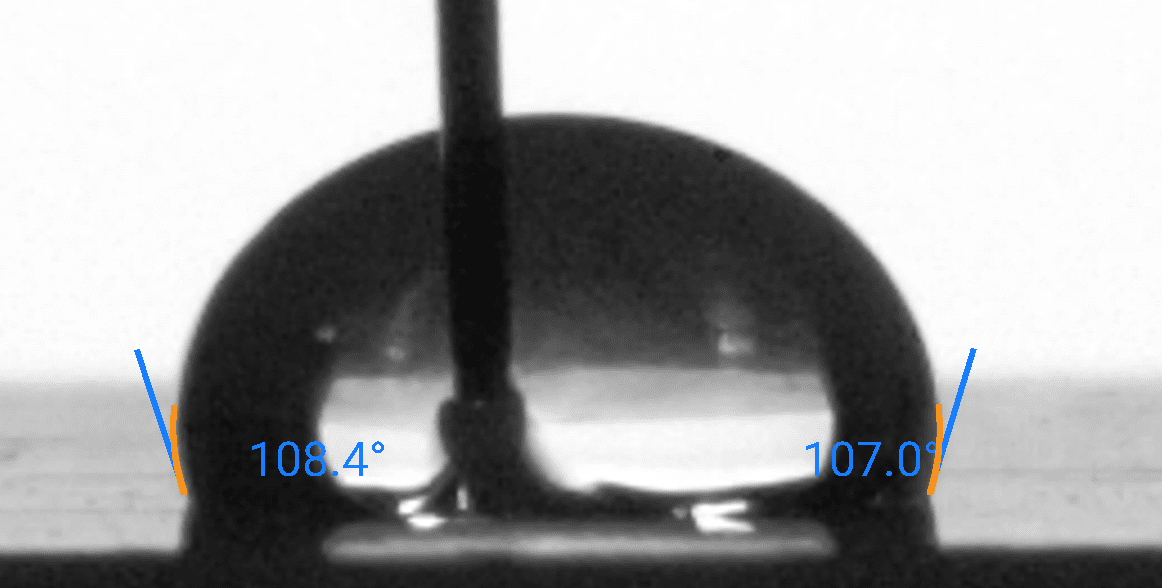
These reference measurements show how deionized water wets four standard substrates measured with the Droplet Lab Dropometer. Use them as visual and numerical benchmarks when you're checking your own sample preparation, treatments, and chemistry.
Full contact angle and surface energy datasets (including additional liquids and statistics) are available on our dataset hub.
The droplet images above are taken from the same benchmark series as our open dataset. For each substrate and probe liquid we report:
● Advancing and receding contact angles (and hysteresis)
● Derived surface energy (SFE) values based on multi-liquid measurements
● Measurement conditions, uncertainties, and sample preparation details
Comparing your own droplet shapes and angles against these references is a fast way to spot contamination, treatment drift, or unexpected changes in wettability.
Measurements were performed with the Droplet Lab Dropometer under controlled laboratory conditions. Treat these values as sanity checks and starting points for your own process targets, not as product specifications.
Esta propiedad mide la fuerza que actúa sobre la superficie de un líquido, con el objetivo de minimizar su superficie.
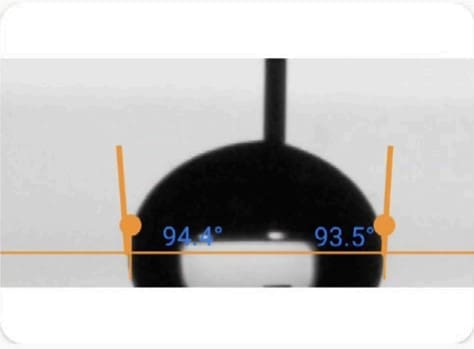
Sample Image taken from Droplet Lab Tensiometer
Tensión superficial dinámica
La tensión superficial dinámica difiere de la tensión superficial estática, que se refiere a la energía superficial por unidad de área (o fuerza que actúa por unidad de longitud a lo largo del borde de una superficie líquida).
La tensión superficial estática caracteriza el estado de equilibrio de la interfaz líquida, mientras que la tensión superficial dinámica explica la cinética de los cambios en la interfaz. Estos cambios podrían implicar la presencia de tensioactivos, aditivos o variaciones en la temperatura, la presión y la composición en la interfaz.
Cuándo utilizar la medición dinámica de la tensión superficial
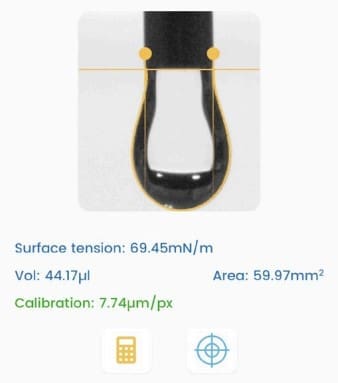
Dynamic surface tension is essential for processes that involve rapid changes at the liquid-gas or liquid-liquid interface, such as droplet and bubble formation, coalescence (change in surface area), the behavior of foams, and the drying of paints (change in composition, e.g., evaporation of solvent). It is measured by analyzing the shape of a hanging droplet over time.
La tensión superficial dinámica se aplica a diversas industrias, incluidas las cosméticas, los recubrimientos, los productos farmacéuticos, la pintura, los alimentos y las bebidas, y los procesos industriales, donde la comprensión y el control del comportamiento de las interfaces líquidas son esenciales para la calidad del producto y la eficiencia del proceso.
Aprenda cómo se realiza la medición de la tensión superficial en nuestro tensiómetro
Para una comprensión más completa de la medición de la energía superficial, lea nuestra medición de la tensión superficial: la guía definitiva
Sample Image taken from Droplet Lab Tensiometer
Aprenda cómo se realiza la medición de la energía superficial en nuestro tensiómetro
Para una comprensión más completa de la medición de la energía superficial, lea nuestra medición de la energía superficial: la guía definitiva
For benchmark contact angle and surface energy values on glass, nylon, PMMA, and Teflon, see the Open Benchmark Data panel above or visit our Dataset Hub for full CSV downloads.
El ángulo de deslizamiento mide el ángulo en el que una película líquida se desliza sobre una superficie sólida. Se emplea comúnmente para evaluar la resistencia al deslizamiento de una superficie.
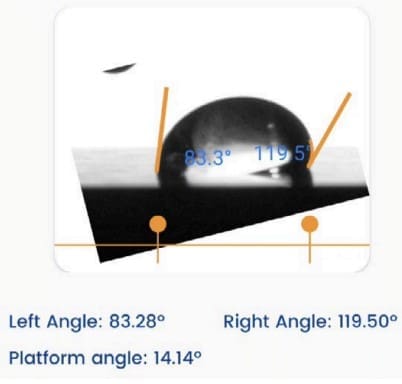
Sample Image taken from Droplet Lab Tensiometer
Aprenda cómo se realiza la medición del ángulo de deslizamiento en nuestro tensiómetro
Para una comprensión más completa de la medición del ángulo de deslizamiento, lea nuestra medición del ángulo de deslizamiento: la guía definitiva
Within the Telecommunications industry, several case studies exemplify the advantages of conducting surface property measurements.
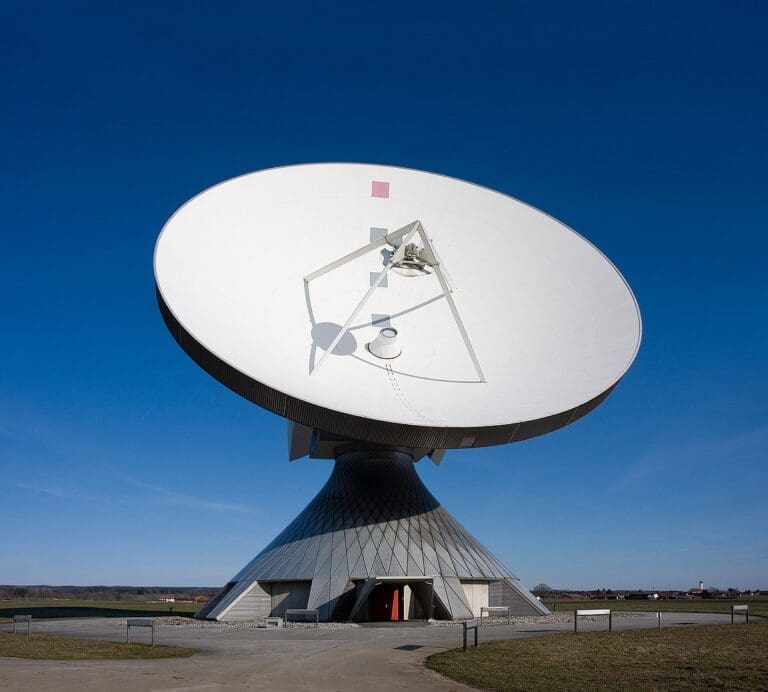
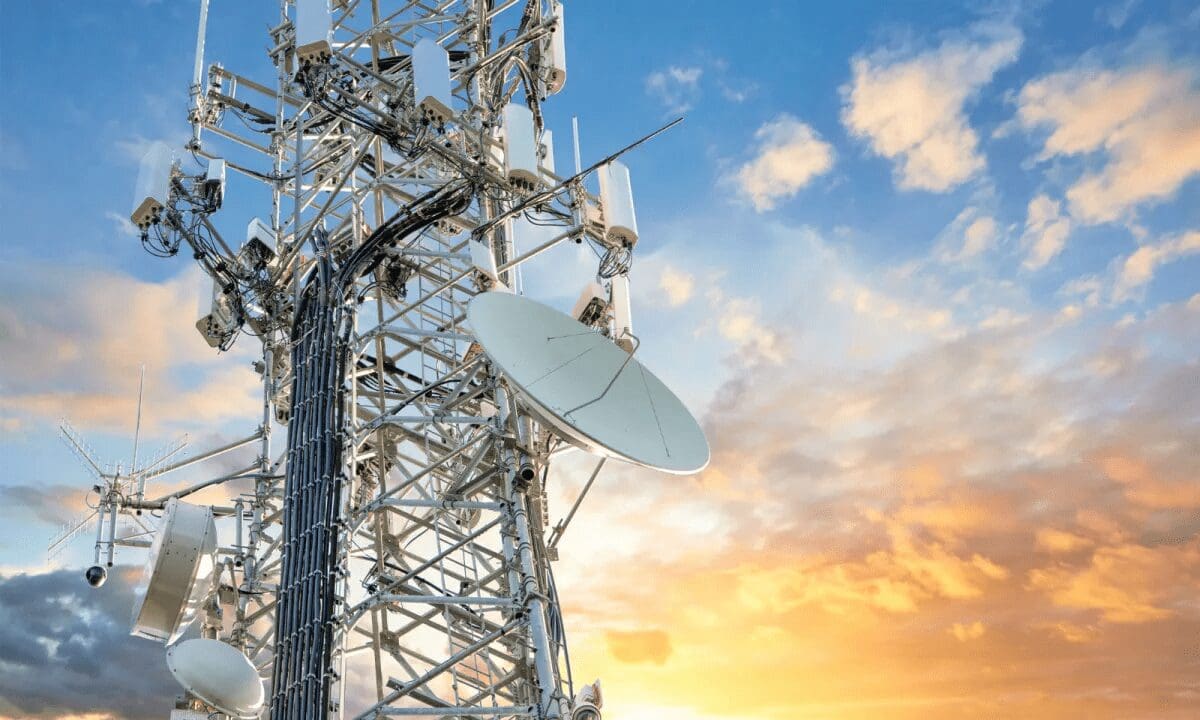
Challenge: Telecom companies face challenges with signal attenuation during heavy rain (rain fade) and disruptions due to ice and snow accumulation on infrastructure like antennas and satellite dishes. These issues can severely impact signal transmission reliability.
Solution: The company aimed to enhance 5G antenna performance under rainy conditions by developing superhydrophobic coatings. Through rigorous experiments with different coatings, they optimized contact angles to design surfaces with high water repellency. This innovation significantly reduced rain attenuation by preventing water droplets from interfering with signal transmission. As a result, the antennas maintained strong signal strengths even during heavy rain.
Moreover, in cold regions prone to ice and snow buildup on satellite dishes, the company conducted tests to identify superhydrophobic materials with large contact angles and low sliding angles. These materials effectively minimized ice adhesion, ensuring uninterrupted signal reception. By reducing the accumulation of ice on the dishes, they enhanced operational reliability and maintained consistent signal transmission in extreme weather conditions.
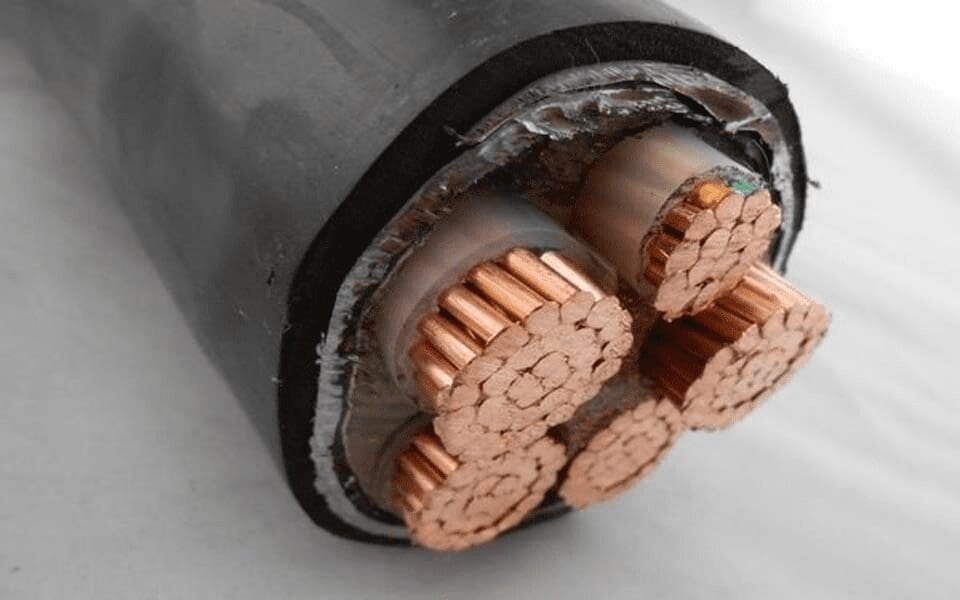
Desafiar : Water ingress into cables affects signal transmission.
Solución : Optimizing the surface tension values can prevent water ingress into cables. Lowering surface tension enhances the water-repellent properties of cable insulation. A telecommunications cable manufacturer develops cables with insulation materials specially designed with low surface tension. This kind of modification will improve water resistance which will reduce the risk of signal degradation in humid environments and ensure the long-term reliability of the communication infrastructure.
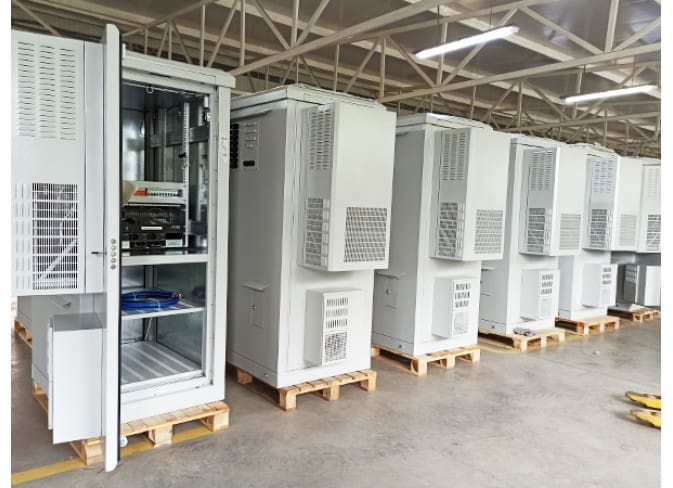
Challenge: Telecom infrastructure, particularly ground-based equipment cabinets, often face issues with soil and mud adhesion. This accumulation not only affects the aesthetics but also impacts the performance and maintenance of telecom components.
Solution: To prevent soil adhesion on telecom infrastructure, the researchers measure and optimize the sliding angle of equipment cabinet surfaces. By selecting materials or applying coatings that achieve a lower sliding angle, they reduce the tendency of soil and mud to adhere to the surfaces. This innovation facilitates easier cleaning and maintenance of the cabinets, ensuring that telecom equipment remains free from environmental contaminants.
Si está interesado en implementar estas u otras aplicaciones, póngase en contacto con nosotros.
In an industry where precision reigns supreme, how can Telecommunications manufacturers ensure their products withstand scrutiny? The answer lies in standards and guidelines: the compass that guides them through the complex maze of quality and performance.
An industry readiness guideline that uses minimum surface energy (commonly ≥38 dyn/cm, i.e., ≥38 mN/m) measured immediately before conformal coating to indicate whether PCB surfaces are likely to wet and hold coating. It is best operationalized as a repeatable QC gate using fixed-time contact angle and/or computed surface free energy (SFE) rather than subjective dyne-pen interpretation.
Use right before the conformal coating station (or right after the final clean/plasma step) to prevent pullback/fisheyes/non-wet defects from entering coating.
Use as a trendable check to confirm washer/plasma stability and to pinpoint drift or localized contamination that causes intermittent coating failures.
Treat “≥38 dyn/cm” as a starting target that must be validated against your coating chemistry, board materials, and defect outcomes. Dyne level/wetting tension and SFE are related screening concepts but not identical quantities, so lock your SOP to one method and correlate to results.
We hope this guide showed you how to apply surface science in the Telecommunications industry.
Ahora nos gustaría entregárselo a usted:
Feel free to leave a comment below—we’d love to hear from you.